
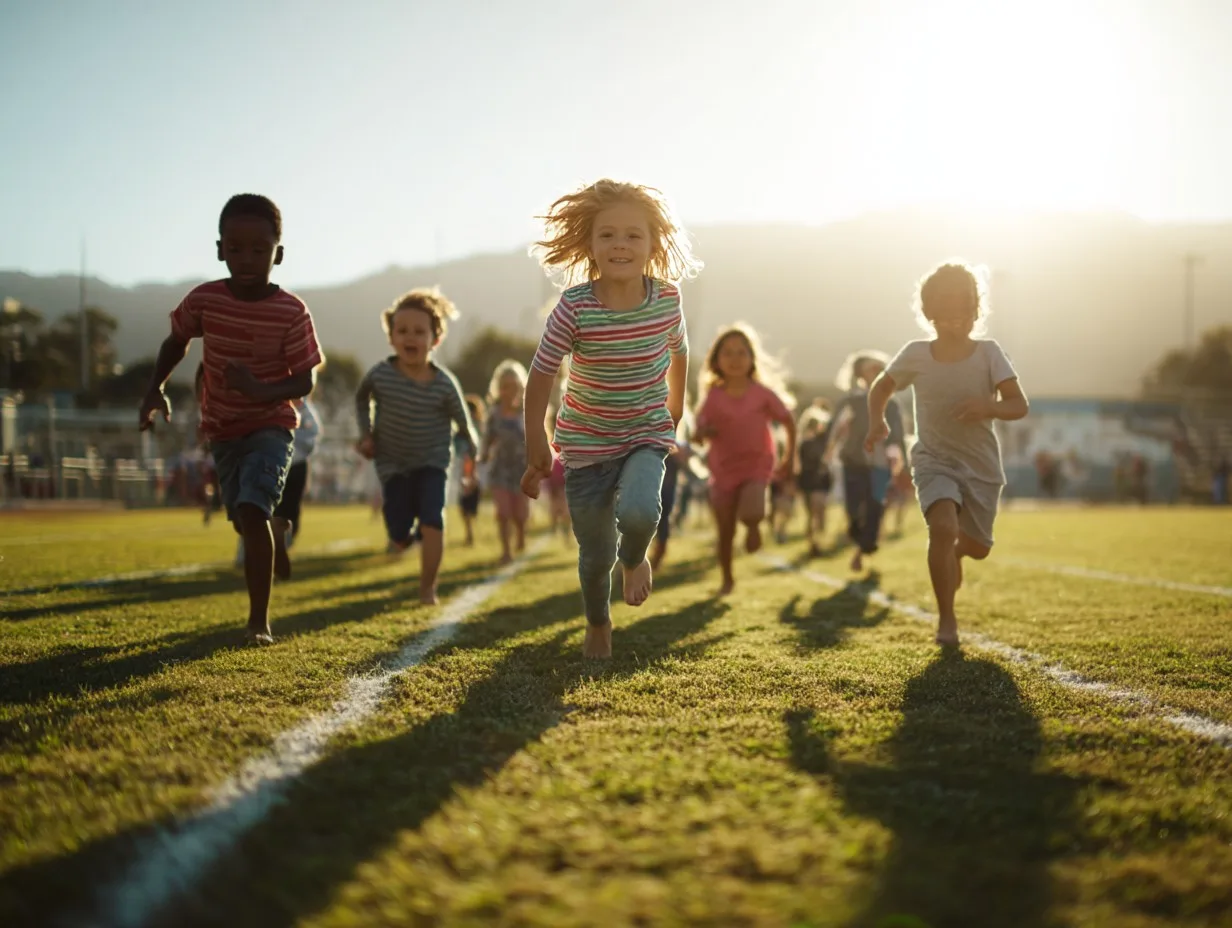
At Edify, we often say that learning doesn’t start with a worksheet or a screen; it starts with the brain. But to truly understand how a child’s brain processes information, we have to look at the primary source of its data: the body.
One of the most fascinating, and often overlooked, factors in a child’s cognitive development is something right under our feet. We aren’t just talking about movement; we’re talking about being barefoot. While it might seem like a simple lifestyle choice or a hallmark of a South African childhood, there is a deep well of neurodevelopmental science that explains why kicking off the shoes can actually lead to better results in the classroom.
The Brain–Foot Connection
The soles of a child’s feet are home to thousands of mechanoreceptors—specialized sensory cells that detect everything from pressure and vibration to texture. These receptors act like high-speed data cables, sending a constant stream of information to the brain.
Think of it this way: wearing thick, rigid shoes is a bit like trying to type on a keyboard while wearing oven mitts. You can do it, but the feedback is muffled. When a child is barefoot, the brain receives a high-resolution map of where their body is in space (proprioception). Research, including a major study in Frontiers in Pediatrics, shows that habitually barefoot children perform significantly better in balance and motor control tasks.
For us at Edify, this matters because motor control and cognitive efficiency are two sides of the same coin. When the brain isn’t struggling to interpret “muffled” signals from the feet, it has more capacity to focus on the task at hand.
Protecting “Cognitive Bandwidth”
We’ve all seen a student who can’t seem to sit still or who tires quickly during a long session. Often, this isn’t a lack of discipline; it’s a matter of “cognitive bandwidth.”
Maintaining posture is a neurologically demanding task. A child’s nervous system is constantly balancing input from the inner ear, their vision, and the receptors in their joints and feet. If their footwear is heavy or alters their natural gait, the brain has to work harder just to keep the body stable and upright.
When that physical “background noise” is reduced—something that happens naturally when a child is barefoot in a safe environment—more neural resources are freed up for:
- Working memory (holding onto the steps of a complex math problem).
- Sustained attention (staying locked into a reading passage).
- Complex reasoning (connecting new concepts to old ones).
At Edify, we prioritize creating an environment where learning feels natural. When a student is physically regulated and comfortable, their progress accelerates.
Confidence in Movement, Confidence in Learning
There is also a profound link between physical competence and “academic courage.” Research from Dr. Daniel Lieberman at Harvard suggests that barefoot movement encourages a more natural gait and stronger foot mechanics. This isn’t just about sports; it’s about how a child carries themselves through the world.
A child who feels physically stable and agile tends to move with more confidence. In our experience, that physical confidence often translates into the classroom. A student who trusts their body is more likely to volunteer an answer, engage in a challenging discussion, and persist through a difficult problem. We aren’t just building better mathematicians or writers; we are helping develop confident, capable humans.
A Practical, Balanced Approach
Of course, we aren’t suggesting that shoes don’t have their place. They are essential “protective equipment” for rough terrain, public spaces, and cold weather. However, we believe that in the safe, controlled environments where learning happens, we should let nature do its work.
In the heat of a South African summer, the benefits are even more immediate. Rigid school shoes can become uncomfortable and restrictive, leading to irritability and fatigue. By allowing for “structured barefoot time,” we reduce that sensory discomfort, helping students stay calm, cool, and focused on their goals.
The Edify Perspective
Our mission at Edify has always been about the whole child. We know that:
- Movement supports cognition.
- Sensory input shapes neural wiring.
- Physical ease enhances mental focus.
Sometimes, the most effective educational interventions aren’t the most expensive ones. They are the ones that align with how our bodies were designed to learn. By understanding the science of the “barefoot learner,” we can help our students unlock a little more of their natural potential—one step at a time.